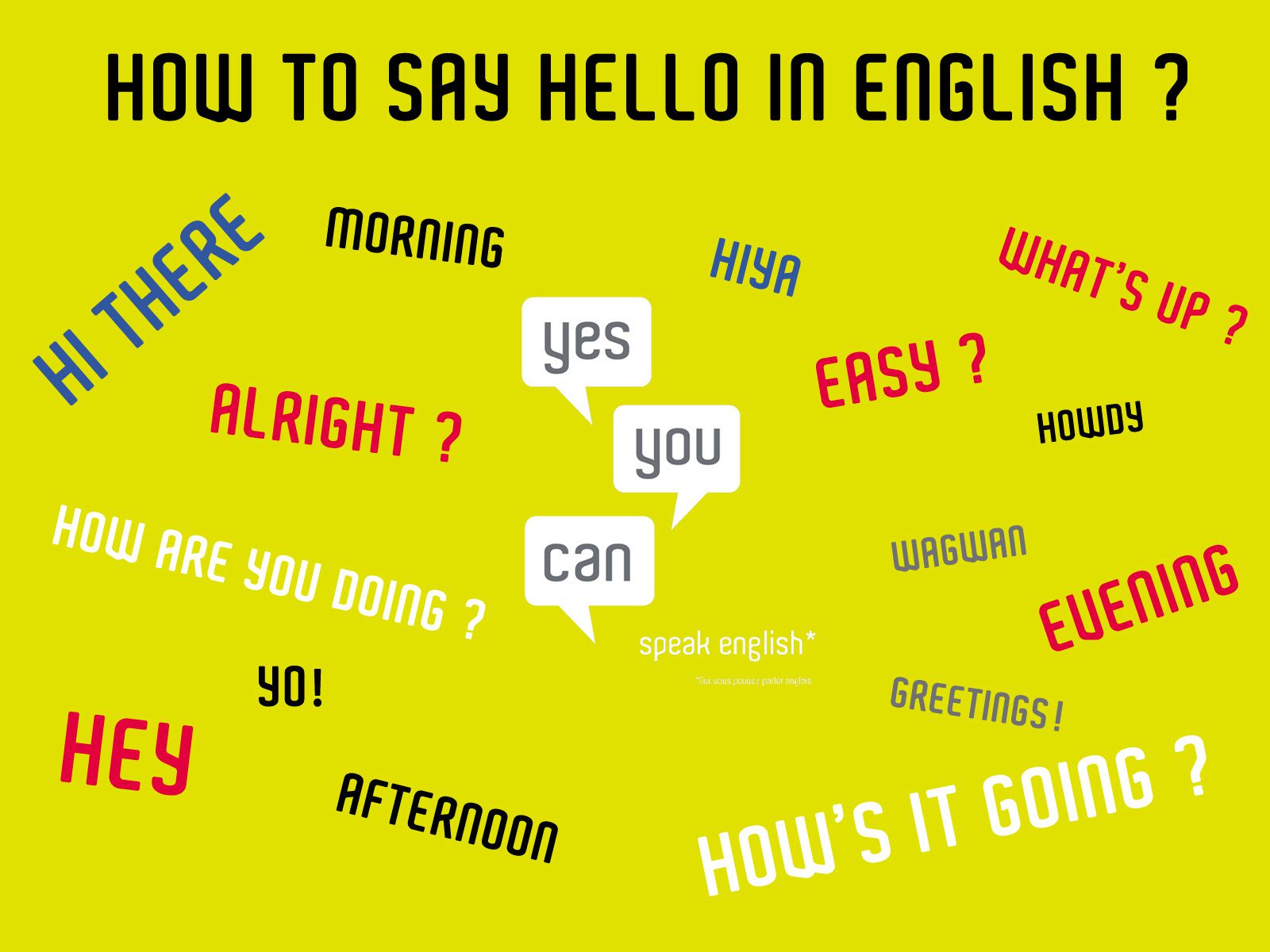
Comment On Dit En Anglais Bonjour
Si dire bonjour en anglais se dit communément « Hello », il existe de nombreuses nuances pouvant être (ou ne pas être) employées ! Est-ce que nous devons saluer nos amis et. C...

In French, bonjour is the common way to say hello. It is usually used as a polite greeting when you meet someone, whether it is a person you know or a stranger.
Bonjour is used to greet someone in the morning, during the day, or in the evening. It can be used in both formal and informal settings. The French phrase is usually accompanied by a handshake, a nod, or a kiss on the cheek.
In English, bonjour is translated to mean “hello” or “good day.” This phrase can be used in any situation, from a casual encounter with a friend, to a more formal business meeting. When used in a formal setting, bonjour is often followed by the person's name or title.
When speaking to someone in English, it is important to remember that bonjour is not the only way to say hello. Other common French greetings include salut, bonsoir, and bonne journée. Each of these phrases has a slightly different meaning and can be used in different contexts.
How to Use Bonjour in English
Using bonjour in English is simple and straightforward. The phrase can be used in the same way as the English phrase “hello.” It can be used in any context, formal or informal. When speaking to someone, it is important to remember to use their name or title if appropriate.
When writing to someone in English, it is also acceptable to use bonjour. This is especially true when sending a formal letter or email. In this case, the phrase should be followed by the person's name or title.
In addition to using bonjour in English, it is important to remember to use other common French greetings in appropriate contexts. Salut, bonsoir, and bonne journée are all useful phrases that can be used to show politeness and respect when speaking French.
Si dire bonjour en anglais se dit communément « Hello », il existe de nombreuses nuances pouvant être (ou ne pas être) employées ! Est-ce que nous devons saluer nos amis et. Comment dire bonjour en anglais de manière la plus simple possible ? Good morning est l'expression la plus utilisée pour dire bonjour en anglais. Elle est employée aussi bien. Mesdames, messieurs, bonjour, et bienvenue à tous ceux et celles qui partageront leurs souvenirs avec nous aujourd'hui. jamesmoore.ca Good morning, ladies and.
Vous pouvez rencontrer de telles salutations lorsque vous faites des affaires dans des restaurants et des magasins. Il existe de nombreuses autres options, mais voici six des. Voici les expressions à utiliser pour dire bonjour en anglais à vos amis ou à votre famille: “ Hello ” : c’est certainement la façon de dire bonjour en anglais la plus. Quand utiliser Hello (bonjour) et Hi (salut) dans un courriel en anglais ? Hello et hi sont des bonnes options pour échanger avec les personnes avec qui vous pouvez avoir une relation plus proche. Hello reste au milieu entre la plus grosse formalité de « Dear » et la moindre formalité de « Hi.
III) Même en argot, on se dit " Bonjour " ! - "Hey!"/ Hey, Man!/ Hi!/ (used by young people) - Are you OK?/ You alright?/ Alright?/ - Yo!/ Hi ya? Les réponses : - Not bad!/ All kinds of. Plus simplement, saluer quelqu'un, c'est lui dire "bonjour = Hello" , "salut = Hi" "Coucou = Hi" ou lui adresser un mot poli de bienvenue. Skip to content Spécialiste de la. donner le bonjour à qn (=saluer) to say hello to sb. (le matin) to bid sb good morning. (l'après-midi) to bid sb good afternoon. souhaiter le bonjour à qn (=saluer) to say hello to.